
A substitute assignment is usually described as a staffing event. Operationally, it creates a temporary bundle of authority.
For a defined period, one person may need access to a classroom, attendance workflow, lesson materials, approved student context, staff communication, emergency procedures and the tools required to keep the day moving. That authority is real, but it should not be vague. It should begin for a reason, carry an explicit scope and end when the assignment ends.
The word contract here does not mean a new legal document. It describes an operating agreement the system should be able to enforce and explain: who is assigned, which role is being performed, which class and time window apply, what information and actions are necessary, who approved access, what changed and when the authority expires.
The assignment is not the teacher’s identity.
The most dangerous shortcut is also one of the easiest: letting a substitute operate through another person’s standing account.
That shortcut collapses two identities into one. An attendance change appears to have been made by the teacher of record. A message may carry the wrong author. An audit log cannot reliably distinguish the person who acted from the person whose credentials were used. Access may also extend beyond the assignment because the borrowed identity was never designed to expire at dismissal.
The National Center for Education Statistics addresses this problem directly in its Forum Guide to Education Data Privacy. Its substitute-teacher case study says teachers should not share login information and describes district practices that use individual credentials, limited access and audit trails. A substitute should enter the system as the substitute—not as a temporary copy of someone else.
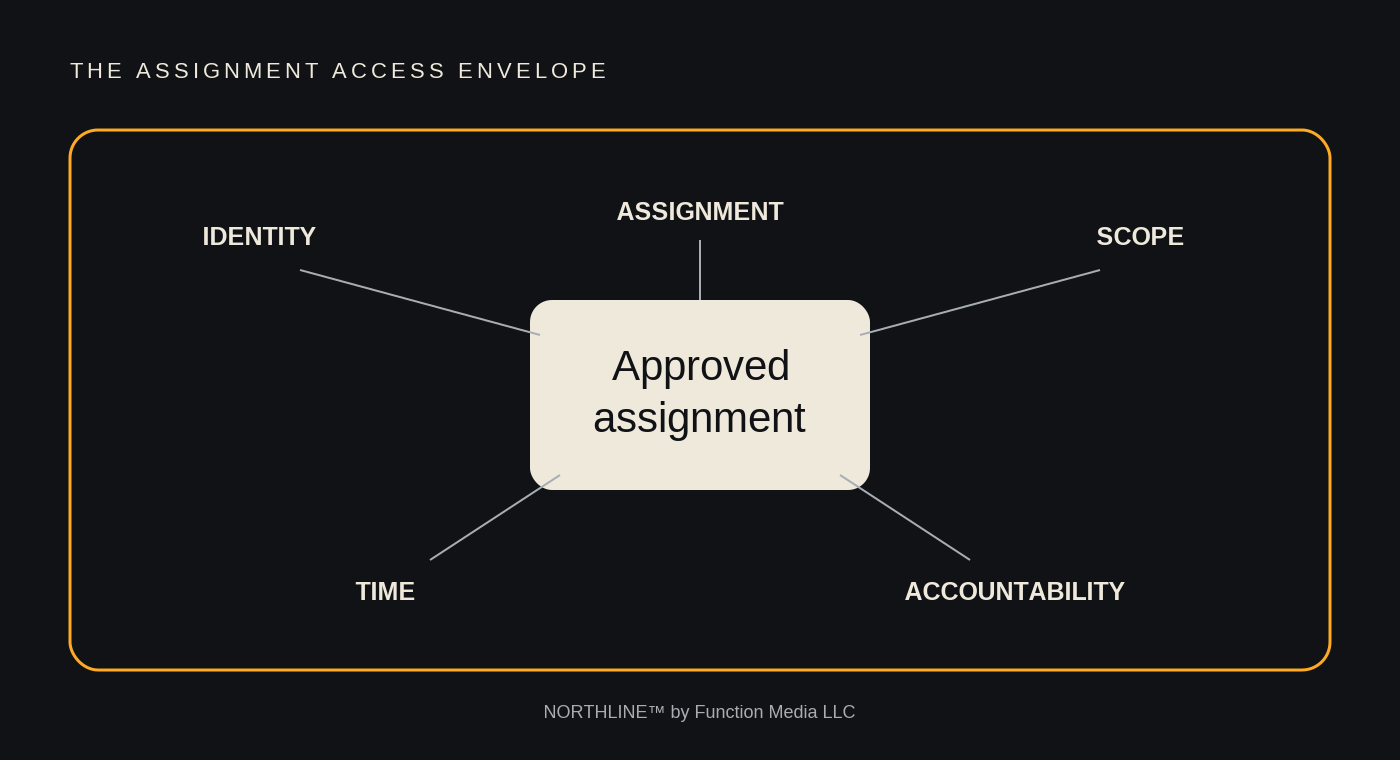
Five terms define the access contract.
Use an individual account.
The school should be able to verify the person accepting the assignment and connect that identity to an individual account. Identity should not be inferred from possession of a shared password, forwarded link or badge left in a folder.
Connect authority to an operational reason.
The assignment is the bridge between identity and authority. Without it, the system only knows that a person holds a general substitute role. It does not know why that person should see a particular roster or enter a particular attendance record today.
Show what the assignment needs—and no more.
Scope may include the assigned roster, attendance action, selected lesson materials, emergency instructions, authorized communication and narrowly defined student information when a legitimate educational interest requires it. Unrelated classes, broad histories, personnel information and administrative functions should not appear simply because the teacher of record could reach them.
The Department of Education’s FERPA guidance says schools must use reasonable methods to ensure school officials receive access only to education records in which they have legitimate educational interests. The design question is whether the district can connect legitimate need to the smallest practical scope.
Make expiration part of the grant.
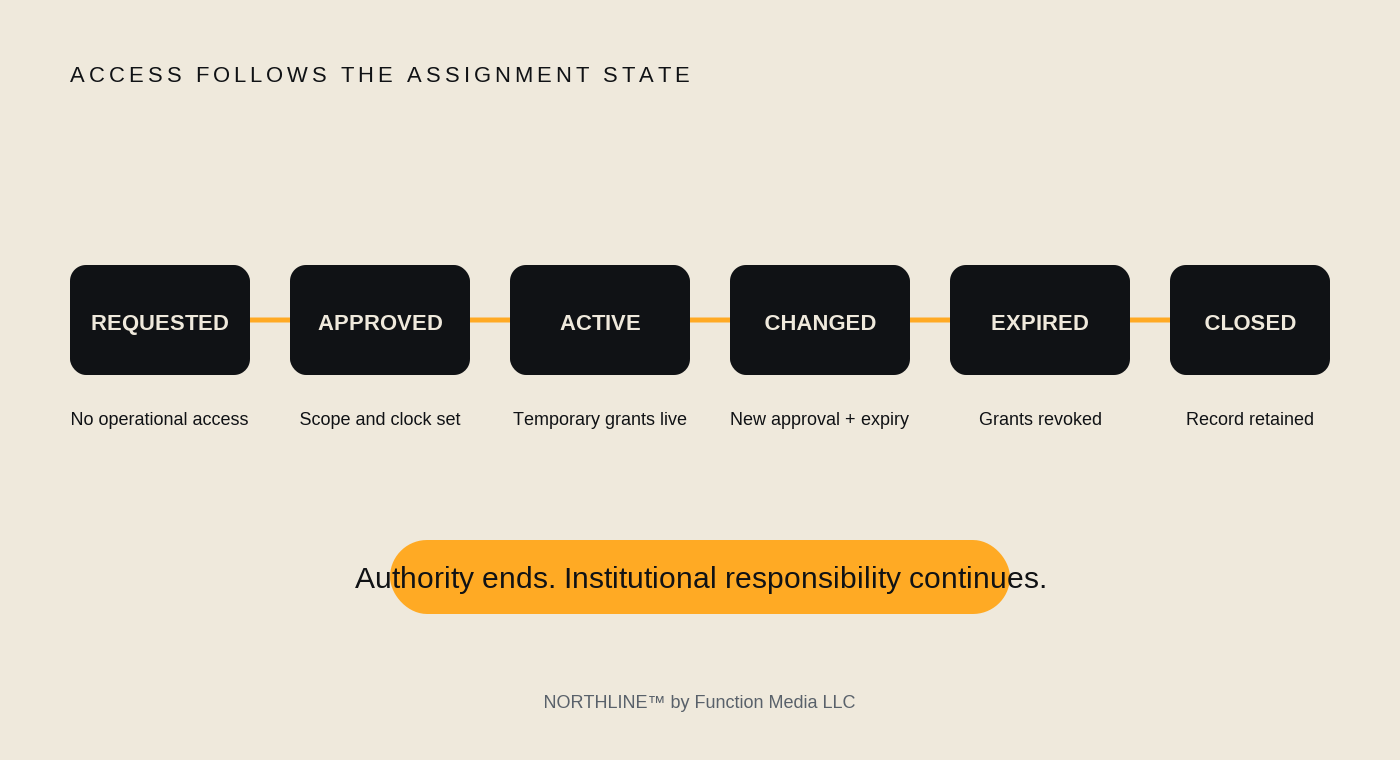
A one-day assignment, recurring weekly assignment and long-term placement are different operating states. Expiration should not depend on someone remembering to remove access later. The system should calculate the end from the approved assignment, revoke temporary grants automatically and preserve the record of what expired.
Keep the grant and its use attributable.
A durable record can show who approved the assignment, which resources were granted, when access began and ended, whether the assignment changed and whether an exception remained open after access expired. Accountability is not surveillance of ordinary teaching. It is the ability to reconstruct consequential access without guessing.
The substitute’s authority should end automatically. The school’s responsibility for the day should not.
Closure returns the record and unresolved work to the institution.
A support card should be useful and temporary.
A substitute support card can present the assignment in one coherent, time-bounded view: school, room and duty; start and end time; bell schedule and approved lesson plan; attendance workflow; emergency procedures; authorized contacts; permitted instructions; open acknowledgments; and a visible expiration state.
The support card should not become a copy of the entire student-information system. Its value comes from selection. It gives the substitute the minimum operating picture needed to perform the assignment while keeping unrelated information out of view.
Physical and digital access should share the same clock.
The staffing platform knows the assignment. The identity system knows the account. The student-information system knows the roster. The access-control system knows the door. The messaging platform knows the channel. Each may be correct by itself while their effective windows disagree.
The assignment should be the shared reference point. Connected systems do not need to become one database, but they do need a common event: assignment approved, active, changed, expired and closed.
Exceptions need explicit states.
A long-term substitute may require expanded instructional access. A person covering multiple rooms may need several narrowly scoped grants. An emergency reassignment may begin before every normal step is complete. Those conditions should not be hidden inside permanent access. They should carry an approver, reason, revised scope, new expiration and review state.
An exception that cannot expire is not an exception. It is a new standing permission that has not been governed as one.
Close the loop at dismissal.
At closure, the system should confirm that attendance and required records were handed off, temporary access was revoked, borrowed equipment or credentials were returned where applicable, open messages were transferred to an authorized role and unresolved concerns were not abandoned with the user session.
The substitute’s authority ends, but the school’s responsibility for the day does not. The closing workflow moves the record from a temporary actor back to the institution.
What NORTHLINE is being designed to support.
NORTHLINE™ by Function Media LLC is being developed as K–12 district-operations intelligence infrastructure. Its design direction connects permitted operational records across staffing, attendance, transportation, communication, safety, services and administrative workflows while preserving role boundaries, provenance, uncertainty and accountable human review.
For substitute operations, the principle is straightforward: identity, assignment, scope, time and accountability should travel together.
This article describes a systems-design principle. It does not claim district deployment, approval, certification, legal compliance or autonomous decision authority. District policy, applicable law, employment requirements and authorized administrators remain controlling.